
Comet™
Mineral intelligence from the data you already own
How Comet Works
Convert geochemistry into operational mineralogy
Mining decisions are made on minerals, not elements.
Exploration teams already generate detailed geochemical assays. But assays tell you what elements are present, not how they are bound in minerals, how alteration zones evolve, or how rock will behave in processing.
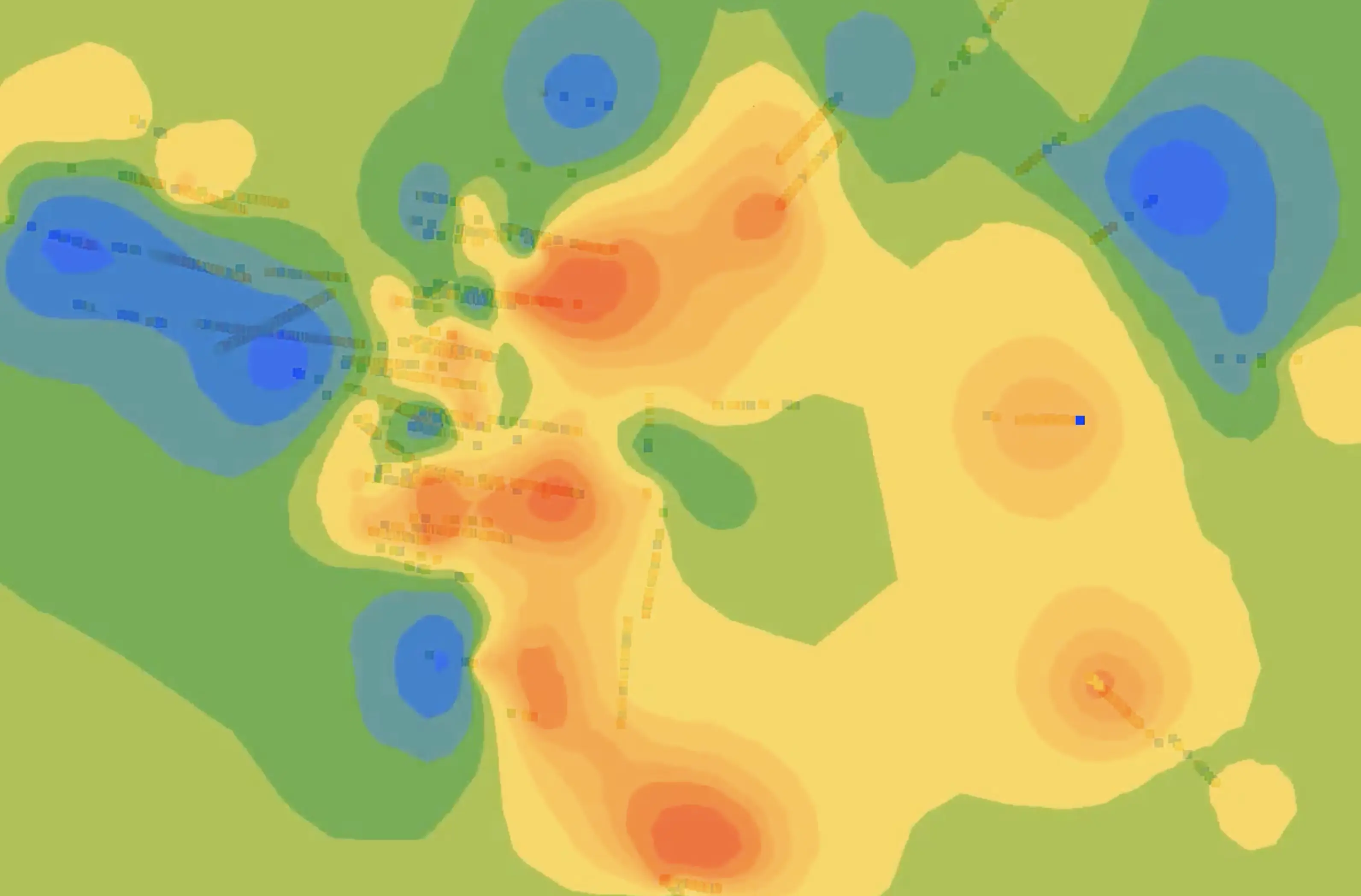
Comet™ is a numerical modelling tool to quantify mineralogy from assay data, giving teams a clearer view of mineral zonation and percentage variability.
- No additional lab work
- No new instrumentation
- No re-logging

Smarter use of data you already have
Comet Resources Hub
Customer Impact & Insights
.png)
WHITE PAPER
Comet™: Converting geochemistry to minerals for smarter exploration and mining
ExoSphere by Fleet®
Integrated intelligence
Comet™ was built to complete the decision cycle.
The integration challenge was clear:
Elemental chemistry
from assays
Assays return elemental data, yet critical mineralogical insight remains subjective, based on geologist's logging or expensive to obtain via analytical techniques.
Structural architecture from geophysics
ExoSphere geophysics identifies system geometry. Comet quantifies mineral abundance within it. Comet was developed to ensure that mineral understanding keeps pace with structural understanding.
Limited, fragmented mineralogical definition
Ensures that geophysical targeting, geochemical assays and mineralogical understanding are part of the same decision framework.

The result is a unified workflow
Fleet's ExoSphere reduces uncertainty before drilling. Comet reduces uncertainty after drilling.
Together, ExoSphere and Comet connect geological architecture to:
- Target definition
- Drill geochemistry
- Quantitative mineralogy
- Early processing insight
Where ExoSphere defines structure, Comet™ defines mineral assemblage.

ExoSphere by Fleet® with Comet
Comet™ is the mineral intelligence layer that complements Fleet's ExoSphere geophysical solutions, delivering end-to-end mineral system insight.

Dr. Scott Halley
Specialist Geochemistry Consultant
Developed by
domain experts
Comet is built on the mineral systems expertise of Dr Scott Halley.
Scott has spent his career analysing how mineral assemblages define zonation, vectoring and processing behaviour in mineral deposits worldwide.
Comet operationalises that expertise.

Solution
How Comet™ works
Convert assays into mineral domains.
Using existing geochemical data, Comet generates quantitative mineral estimates across every drill interval, providing continuous mineral zonation without additional lab work.
It works alongside spectral systems, adding robust mineral quantification to clay and texture analysis.
Results
What Comet™ delivers
Continuous mineral zonation
Quantitative mineralogy for every assay interval. Map alteration domains and vector using mineral systems, not proxies.
Objective logging
Replace subjective visual estimates with consistent mineral weight percentages across teams and projects.
Early metallurgical visibility
Understand mineral variability, hardness and sulfide behaviour early, reducing downstream processing risk.
Immediate results
Run as soon as assays are returned. No additional sampling or specialist analysis required.

Comet on Your Project
Ready to see what your assays are telling you?
Every drill program generates chemistry. Not every program extracts mineral intelligence from it.
Tell us about your project and we'll assess how Comet can support your mineral domain modelling, vectoring strategy and early metallurgical insight.
FAQs
FAQs
What mineral deposit types can I analyse with Comet™?
Comet estimates the percentages of hydrothermal minerals regardless of their origin.
The user interface uses predefined mineral lists for common deposit types as presets to
simplify the calculation setup.
The mineral systems available in the prototype include:
- Porphyry: Including Cu (with and without Advanced Argillic alteration).
- VMS: (Greenschist).
- Epithermal: Both Low and High Sulfidation.
- Greenstone Gold: Middle and Upper greenschist.
You can customize these mineral lists to suit any kind of hydrothermal system you are exploring
Can Comet™ analyse sedimentary systems?
Yes, Comet can be used in sedimentary rock settings, but is unsuitable for use for typical soil analysis.
What is the minimum assay data required for the tool to be effective?
Comet requires whole rock analysis data obtained from a reputable laboratory using a comprehensive digestion and analytical method.
- Required Methods: A 4-acid digest or fusion method combined with Inductively Coupled Plasma Atomic Emission Spectroscopy (ICP-AES) analysis, or laboratory XRF.
- Why: These methods provide the comprehensive data for the major, rock-forming elements essential for the mineralogy calculation.
- Important Note: Aqua regia is not effective as it does not fully dissolve the entire sample
What are the minimum elements required?
The minimum required elements are Al, Ca, Fe, K, Mg, Na, and S.
It's also recommended to include Ba, Mn, P, Ti, Cu, Pb, and Zn, as their host minerals can contribute to the rock's overall weight percentage.
How does the output integrate with my existing geology software?
Comet's output is designed for easy and direct integration with your existing software toolkit, including platforms like Leapfrog and ioGas.
The current workflow is straightforward:
- Download from Comet: After a calculation is complete, you download the results as a simple CSV file.
- Import into Your Software: You can then directly import this universal CSV file into virtually any geological modelling or data analysis software.
The output file contains your Sample_ID and the calculated percentages for each mineral, enabling seamless merging with your existing project data for 3D modelling and pattern analysis.
Future releases are planned to include direct, one-click integration, but this export/import process ensures immediate compatibility with your established workflow.